Developments in Rwanda’s Mining Sector
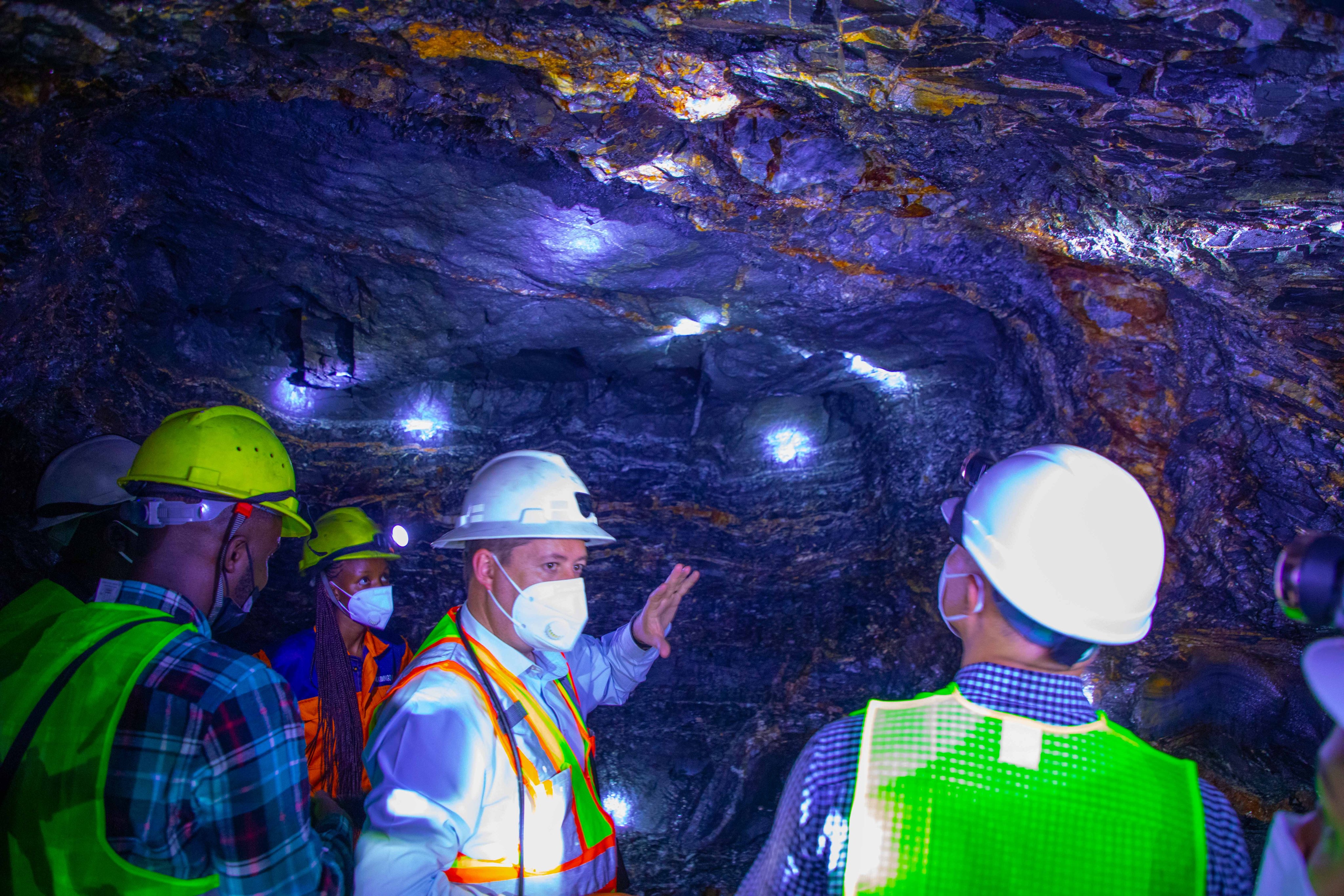
Rwanda’s mining sector was born in the early 1920s when Belgian companies first started mineral exploration. In the early 1930s, operations officially began focusing mainly on tin minerals. Decades later, in 2006, Rwanda’s Government privatized and regulated the mining sector, taking on the major responsibilities of exploration and follow-up of the current mineral markets.
Today, the mining sector is the country’s second-largest export revenue earner after tourism, and Rwanda’s ambition to boost it lies in local mineral value addition. Active mines in Rwanda extract various metals and metallic minerals such as wolfram, cassiterite, coltan, and gold, as well as gemstones that include amethyst, sapphire, tourmaline, and aquamarine to mention a few.
‘’This sector is bringing in revenue and contributing to Rwanda’s development, and we have expectations to raise more revenue and do it in a more sustainable way. For instance, from January to September 2022, we reached 585 million dollars in revenue from the mining sector considering the last quarter of the year has not been computed yet.’’ Yamina Karitanyi – CEO of Rwanda Mines,Petroleum and Gas Board
The mining sector has contributed USD 1.6 billion to Rwanda’s economy in the past three years, leading to the socio-economic transformation of surrounding local communities by creating jobs, providing medical insurance schemes, and developing road network infrastructure.
When it comes to value addition, local refineries and gem-cutting facilities have also contributed greatly to a significant increase in the value of Rwanda’s minerals and gemstones, as they are exported in refined and polished forms to countries in Europe, Asia, and USA.
“We mainly export the 3Ts (tin, tantalum, and tungsten) to different countries, such as Malaysia, Thailand, and sometimes China. We also export to Austria, Hong Kong, Japan, and sometimes the US. We also export gold, which is on high demand mostly in Europe and Arab countries.” Jean Malik Kalima – Chairman of Rwanda Mining Association
As Rwanda’s mining sector continues to modernize, it has adopted and integrated mechanized mining methods, as well as established a regional Geochemical Laboratory and accredited learning institutions dedicated to its mining eco-system. The Regional Certified Geochemical Laboratory conducts analytical and research activities in the sector, with an aim to be a regional hub for mineral inspection, testing, and certification services.
“The purpose of this mineral testing laboratory is to do sample analysis within the country instead of doing it outside, to accredit other laboratories. Their contribution is to cut down on analysis costs done abroad, and cut down on time taken to get the results.” Roy Kankwanzi-Tuipende – Geochemistry Expert at RMB.
Accredited learning institutions such as the School of Mining & Geology at the University of Rwanda and the Integrated Polytechnic Regional College Kigali, train and equip engineers and geologists who effectively implement practices, regulations and policies that govern Rwanda’s mining sector.
“We design the curriculum to an international standard. We train students for four years, before sending five of our best graduates to South Korea, and four to Australia for Master’s Degrees. For Ph.D. studies, we also send four; one to the UK, one to the US, one to China and one to South Korea.” Prof. Digne Rwabuhungu – Dean at School of Mining and Geology (University of Rwanda)
Environmental protection regarding waste management has become more efficient with improved recycling systems that collect, filter and re-utilize water used in the washing of ore minerals. Once mining operations cease, any ground affected by exploration is levelled and previously cut down trees and bushes are replanted around mining sites. Today, Rwanda’s mining companies have planted close to one million trees, and this number continues to rise.
Gender equality implemented policies go beyond employing women in mining companies, to building Early Childhood Development centers to enable those with children to keep working without worry. Companies are also adopting Rwanda’s Sexual and Gender Based Violence policy that promotes the socio-economic development of women in the mining sector. As a result, women continue to feel safer in the environments they work in.
Rwanda’s future looks bright as more young engineers are trained, more investors attracted, and more companies come together under the Rwanda Mining Association to not only build the mining sector, but the nation as a whole.
“Our homework is to keep the new way of thinking that the mining sector is not just an extractive industry, but will bring in many opportunities for other sectors to grow – all related to technology, innovation and skills development. I see mining very much a part of this journey, and it’s exciting.” Yamina Karitanyi – CEO of Rwanda Mining, Gas and Petroleum Board