Rwanda Gemstones
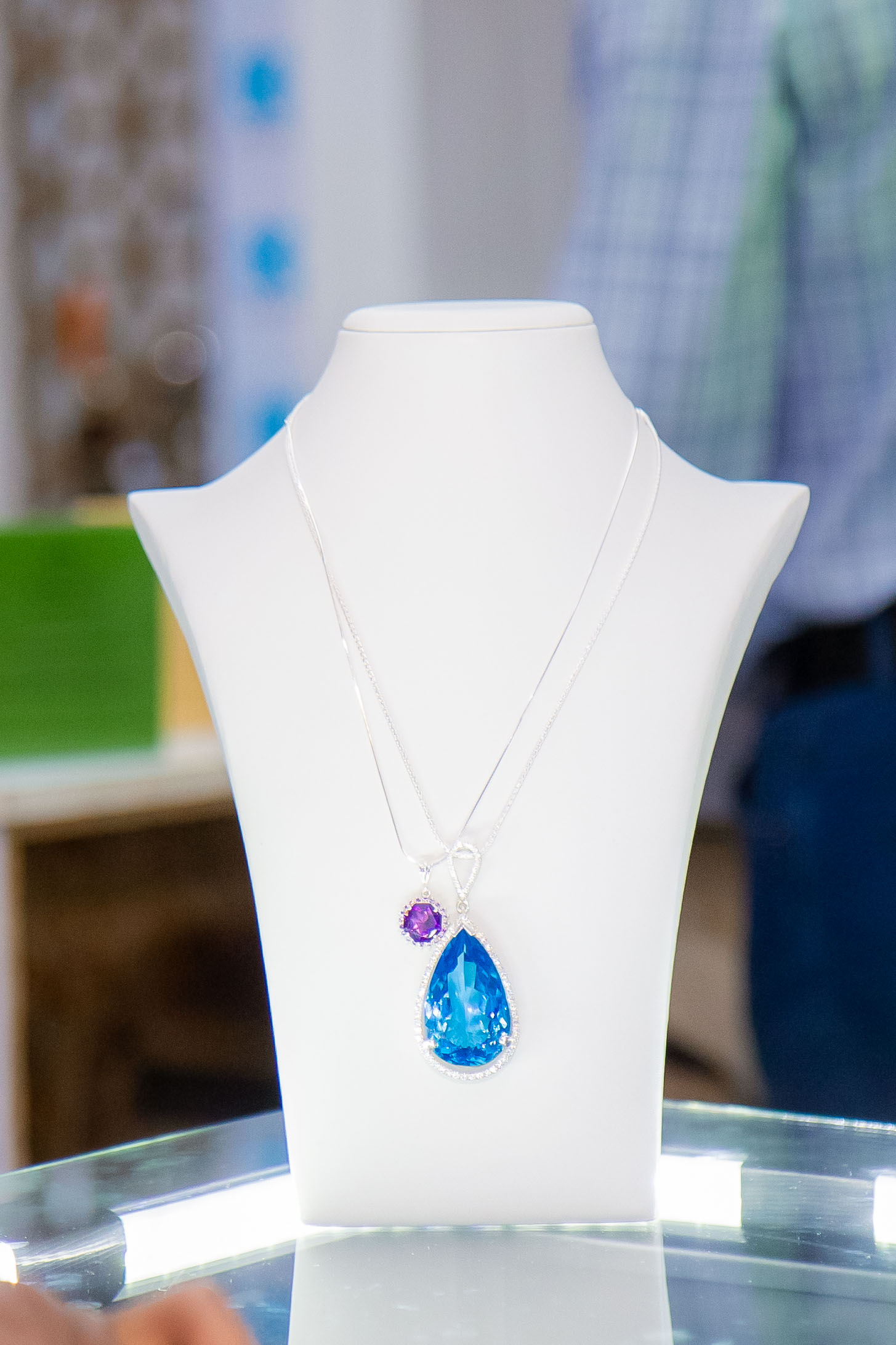
Gemstones are highly prized, rare pieces of durable mineral crystals, which when cut and polished, are mainly used to make jewellery and other decorative ornaments. They come in different colours, shapes and sizes from various parts of the world, including Rwanda.
The country of a thousand hills is among the few African countries that are endowed with some of the world’s most sought-after high-quality gemstones, which are legally extracted, processed and exported to the international market. These include Amethyst, Sapphire, Tourmaline, and many more. and Gold.
Rwandan Amethyst is extracted from opencast mines located in the highlands of the Western and Southern parts of Rwanda. It is characterised by a great depth of colour; a reddish violet that shifts to a more intense bluish purple when exposed to daylight. In addition to its beauty, it’s also durable, making it a favourite for making Made in Rwanda jewellery.
Rwandan Sapphire, another of Rwanda’s most beautiful gemstones, has been extracted in the South-Western volcanic region of Rwanda since 1950. Sapphire deposits originate from specific alkali basalt lava flows, or from weathering of basalts along both old and more recent rivers. This gemstone is usually of deep blue colour, but also yellow, orange, purple and green ones are found. In addition to making beautiful jewellery such as crystals for wristwatches, sapphire is also used to make highly-durable windows.
Found mainly in the Southern and Western Provinces of Rwanda, Rwandan Tourmaline usually comes as a by-product from cassiterite and coltan mines. It displays a great range of colours, such as green, blue, pink and the most common, black. Also in addition to making gorgeous jewellery, black tourmaline’s ability to generate electric charges when under mechanical stress, or to change shape when in contact with voltage employs it in pressure-measuring devices.
Rwandan Gold, which is more of a precious metal than a mineral, is one of the densest of all metals. It is found in Rwanda’s Northern Province, which is known for its distinct volcanic landscape, including valleys that contain both placer and alluvial gold deposits. Gold mining started in the 1940s in the South-West of Rwanda in and around the Nyungwe forest, which was later assigned as a National Park, and later in the Miyove area located in the North of Rwanda. It is a good conductor of heat and electricity, it is the most malleable of all metals, and of course, a well-known component of some of the world’s most expensive jewellery.
Rwanda’s gemstones and precious metals are extracted, processed and exported by licensed companies, governed by the Rwanda Mines,Petroleum and Gas Board..